It is Thursday afternoon and you are loading ladders back onto the truck after three days on a two-story exterior on Maple Street. The house looks sharp. The homeowner is happy. And as you pull away, you drive past the place two doors down with the chalking, faded siding, and the one on the corner with the peeling trim. Both of those owners watched your crew work all week. Neither of them will ever call you, because you never gave them a reason to, and in a month one of them will hire whoever answered a Facebook ad first.
That is the single most expensive habit in a small painting shop: doing great work on a street and then driving off without turning it into the next job. The neighbors who watched you are the warmest leads you will ever get, and they cost you almost nothing to reach.
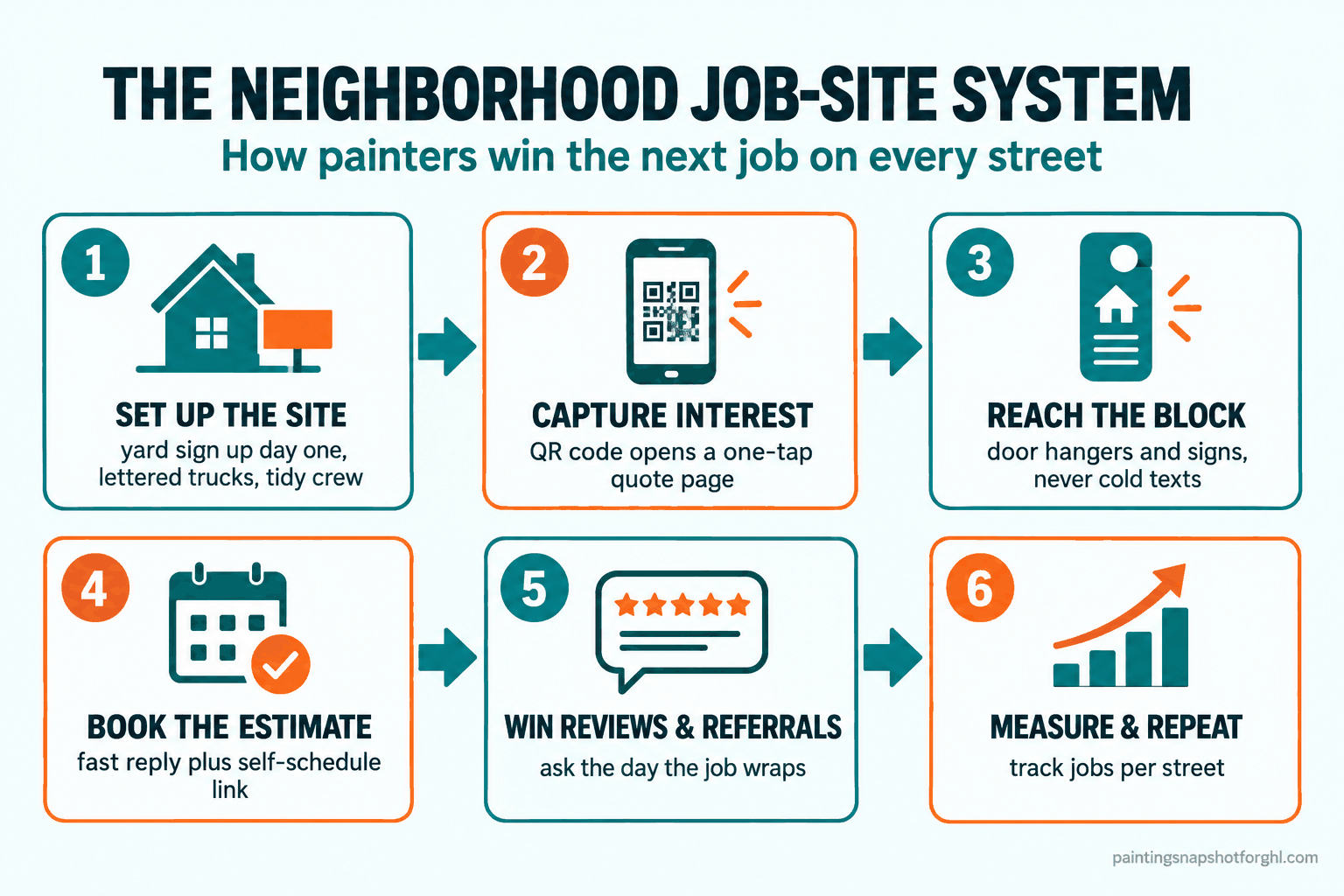
Neighborhood marketing for painters means treating every job site as a lead source, not just a job. You set the site up to get noticed, capture the neighbors who are interested, reach the rest of the block the legal way (door hangers and signs, never cold texts), book the estimates on their time, and turn the finished house into reviews and referrals that feed the next street. Done right, it books jobs at a fraction of what a paid lead costs, because the proof is already standing in the front yard. This post lays out the whole system in six stages, with the exact signage, door-hanger, and text copy you can steal this week, and the compliance rules that keep it from blowing up in your face.
In this post
- Why the block is your best lead source
- Stage 1: Build the job site to get noticed
- Stage 2: Capture the neighbors who are interested
- Stage 3: Reach the rest of the block (the legal way)
- Stage 4: Book the estimate on their time
- Stage 5: Turn the finished house into the next job
- Stage 6: Measure jobs per street, then repeat
- How this plays out at three sizes of shop
- The compliance part that bites painters
- Objections I hear every week
- Frequently asked questions
Why the block is your best lead source
Start with the money, because it is the whole argument. A homeowner who hired you through a paid channel found you cold, and you paid for it. Painting carries the highest cost-per-click of any home-service trade at about $13.74 a click, and an average home-services Google Search lead runs roughly $90, a Local Services Ads lead around $53, and a Facebook lead near $28 (LocaliQ, 2025; Search Engine Land, 2025). A neighbor who watched your crew work all week costs you a door hanger and five minutes of a crew lead’s time.
Roughly what one lead costs a painting contractor by source, 2025. The neighbor bar is a few dollars of printing, not a paid click. Paid figures from LocaliQ and Search Engine Land home-services benchmarks; the job-site figure is illustrative of printing and crew time.
It is not just cheaper, it closes better. People buy from painters they already trust, and nothing builds trust like watching the work happen next door for three days. There is also plenty of work to go around: the U.S. had about 326,900 painter jobs in 2025 at a median wage near $49,400, and the Bureau of Labor Statistics projects steady 3 percent growth through 2035 (U.S. Bureau of Labor Statistics). You do not need to chase every cold lead in the county when the warm ones are standing in the next driveway.
Stage 1: Build the job site to get noticed
A job site generates leads on purpose or by accident, and accident does not pay. The goal is for every neighbor who walks their dog past that house to know who did the work and how to reach you in one glance.
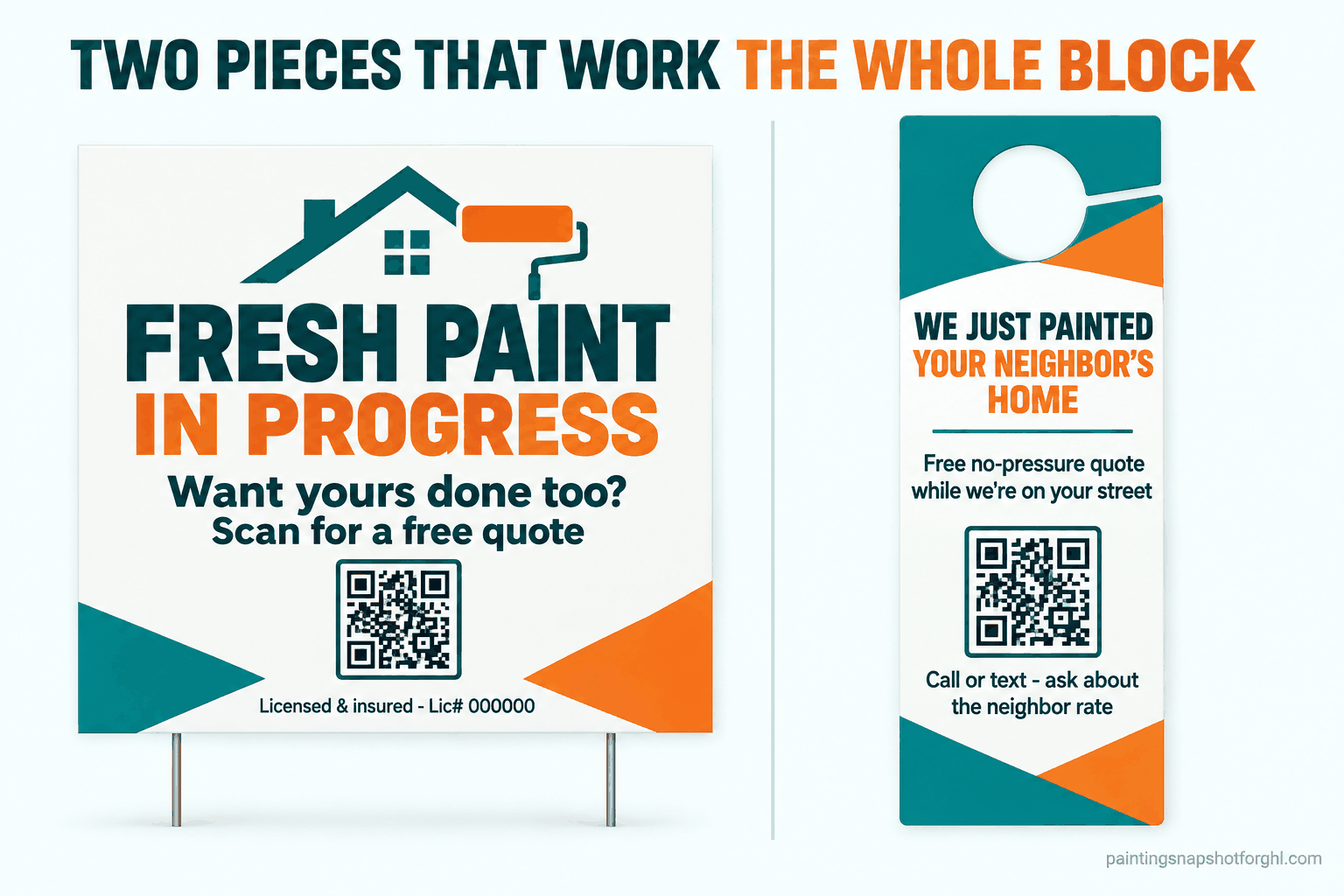
Put a clean yard sign up the day you start, not the day you finish, so it works the whole job. Wrap or letter your trucks so they read from across the street. Keep the site tidy: drop cloths down, crew in branded shirts, music low. A sloppy site tells the neighbors exactly what their job would look like, and no sign fixes that. Take a clean before-and-after photo of the house, because the finished shot is the best ad you will ever run on that street.
How it breaks: the sign has a phone number nobody can read from the sidewalk and no easy way to act on it, so an interested neighbor means to call, forgets by dinner, and that is the end of it. The fix is to make the sign scannable and the next step one tap, which is Stage 2.
Stage 2: Capture the neighbors who are interested
Interest is perishable. A neighbor who is curious on Tuesday has forgotten you by Friday unless you make it dead simple to raise their hand now. The QR code and a single mobile page turn that passing thought into a lead you own.
The QR code on your sign and door hanger should point to one clean page built for a phone, not your homepage. It names the street, shows the before-and-after from the house you are working on, and gives one easy action: a short “get my free quote” form, or a button that opens a text to your business number with the message pre-filled. The pre-filled text matters, because it gets the neighbor to opt in to hearing from you, which is the thing that makes every later message legal.
How it breaks: the QR code dumps the neighbor on a slow, cluttered homepage where they have to hunt for a phone number, so they bounce. One page, one offer, one tap. And when a lead does come in, speed decides it, the same way a missed-call text-back wins the leads your competitors let go to voicemail.
Stage 3: Reach the rest of the block (the legal way)
Not every neighbor will scan a sign, so you go to them. This is where painters either build a quiet lead machine or step on a legal landmine, and the difference is the channel. You can put a printed piece on any door. You cannot send a marketing text to a cell phone unless that person gave you permission first, and “they live near a job” is not permission.
So the block gets printed outreach, not cold texts. The day before or the day you finish a house, walk the ten to twenty closest homes and leave a door hanger or a short “we’re working on your street” card. It is specific, it is local, and it lands while your trucks are still visible. For a bigger push, a simple mailed letter to the surrounding blocks works the same way. The only people who get a text are the ones who texted or opted in first.
How it breaks: somebody decides to “save time” by scraping neighbor cell numbers and blasting a text, and now you have a Telephone Consumer Protection Act problem instead of a lead source. Keep texting to opted-in contacts only, and let the door hanger do the cold outreach, because paper does not need consent.
Stage 4: Book the estimate on their time
A neighbor who raised their hand is warm, but warm cools fast if booking an estimate means a round of phone tag. The whole point of catching them while your trucks are on the street is to lock the appointment before the feeling fades.
Reply to every opt-in within minutes, not hours, and offer a self-scheduling link so they can grab a walk-through time without waiting for you to call back after dark. Because you are already working their street, you can often offer to swing by that same week, which no competitor two towns over can match: “I’m already on [street] through Friday, I can look at yours Thursday evening if that’s easy.”
How it breaks: the lead comes in during the workday, you are up a ladder, you mean to call back and forget, and by the time you do they have booked someone else. An automatic reply and a booking link close that gap so the neighbor books themselves while you keep painting.
Stage 5: Turn the finished house into the next job
The finished house is the engine. A fresh exterior with a tidy yard and a happy owner is proof the whole street can see, and it only pays if you capture it before you move on. Two things happen the day you wrap: you ask for the review, and you ask the homeowner to point you at a neighbor.
Ask for the review the same day the job finishes, while the owner is in the driveway loving the result, because a request a week later gets ignored. Fresh, steady reviews are what make the next neighbor trust you before you ever meet, and getting them is a system, not luck (how to get more 5-star painting reviews). Then ask the happy owner directly whether a neighbor has mentioned wanting work done, because a warm intro from the person whose house you just painted closes at a rate no ad can touch. That is the core of any painting referral program that runs on autopilot.
How it breaks: you finish, you are tired, you drive to the next job, and you never ask. The review never gets left and the referral never gets made, so the warmest moment on that street passes you by. Automate the ask so it happens on your busiest week too.
Stage 6: Measure jobs per street, then repeat
What you do not measure, you cannot repeat. The one number that tells you this is working is jobs per street: how many homes you painted on a block that started with one. One is just a job. Three is a system.
Track where every lead came from, so a “neighbor on Maple” lead is tagged separately from a Google lead. Over a season you will see which neighborhoods compound, which blocks to aim crews at, and your true cost per booked job from the job-site channel, which is almost always your lowest and should decide how hard you lean on it versus buying cold leads (what a painting lead really costs).
How it breaks: everything goes into one pile labeled “word of mouth,” so you cannot tell the job-site system from dumb luck and you stop doing the parts that work. Tag the source on every lead and the picture gets clear fast.
How this plays out at three sizes of shop
The system is the same, but how you run it changes with the size of the crew.
The solo operator or two-man crew. You are the marketing department, so keep it dead simple. One reusable yard sign, a stack of door hangers in the truck, and a free or cheap QR code that points to a one-page form. You cannot reply in thirty seconds while you are cutting in a ceiling, so the one piece worth automating is the instant reply and the booking link. Walk ten doors at the end of each job. That is it. At your size, two extra jobs a month off streets you are already on can be the difference between a full calendar and a slow one.
The mid-size shop, three to five painters. Now you have more sites running at once, so the leak is bigger and so is the prize. Standardize it: every crew puts the sign up on day one, drops door hangers before they leave, and logs the finished-house photo. Centralize the leads so a neighbor who texts any crew lands in one inbox and gets a fast reply and a booking link, the way a real painting lead management system handles it. One person, or one automation, owns the review and referral asks so they never get skipped.
The larger outfit, eight to ten painters and multiple crews. At this size the job sites are a real media channel, and the win is consistency across crews who will not all remember to do it. The signs, hangers, QR pages, and follow-up all have to be automatic, not left to whoever remembers, and you should track jobs per street by neighborhood to feed the winners back into which bids you chase. Asking ten painters to run a marketing system by hand never holds, which is where a done-for-you setup earns its keep.
The compliance part that bites painters
This is the stage painters skip and then regret, because neighborhood marketing touches two rules most shops never think about.
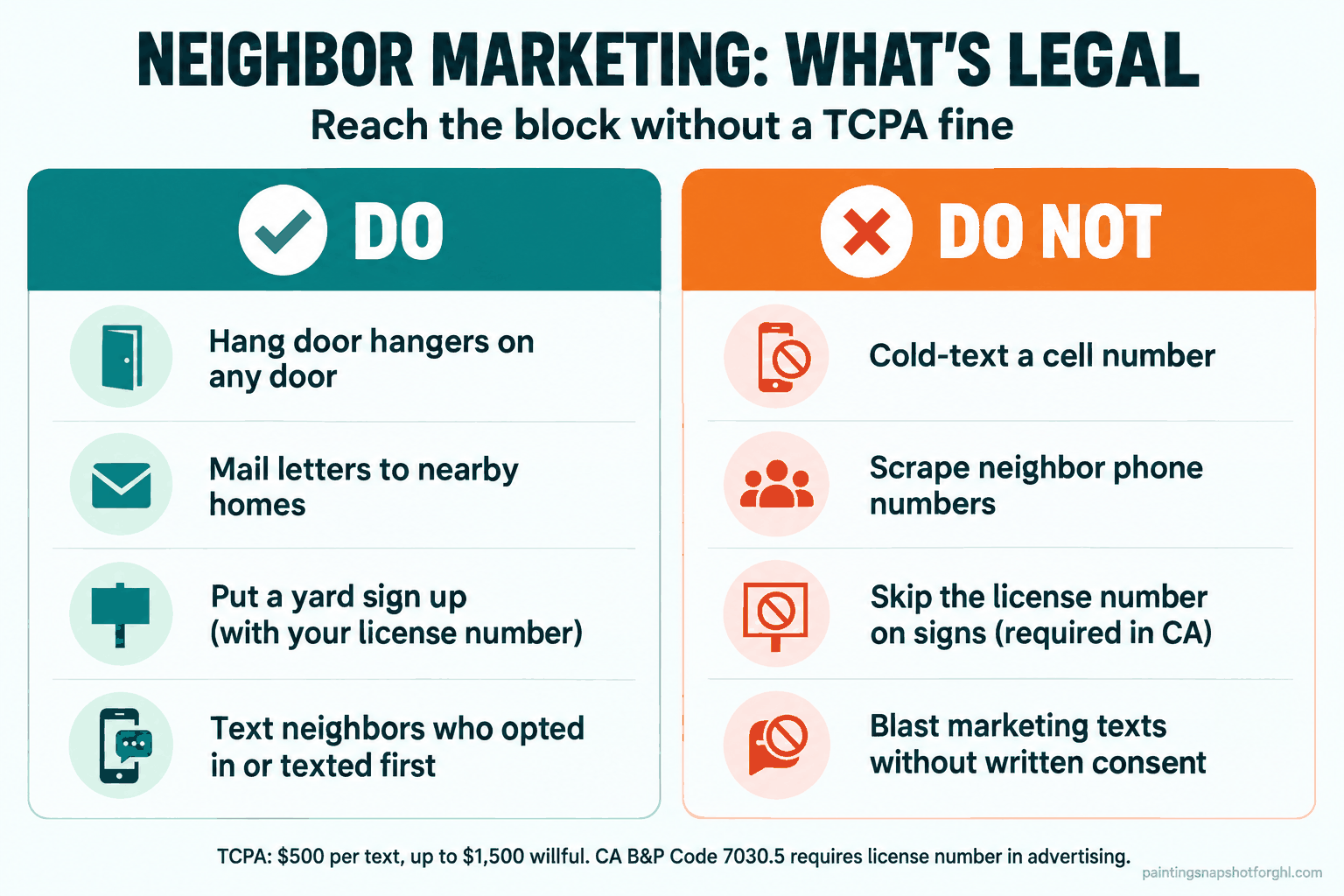
First, texting. Under the Telephone Consumer Protection Act, you need prior express written consent before you send a marketing text to someone’s cell phone, and the penalties run $500 per text, up to $1,500 if it is willful (47 U.S.C. 227, Telephone Consumer Protection Act). That is why the whole system is built on opt-in: the neighbor texts you first or submits the form, and only then do you text back. Door hangers and mailers need no consent, which is exactly why they do the cold outreach. If you text at any volume for your business, you also need your number registered for A2P 10DLC so your messages actually deliver.
Second, your sign and your truck are advertising, and some states regulate that. In California, Business and Professions Code section 7030.5 requires a licensed contractor to put their license number in all forms of advertising, which includes yard signs, truck wraps, and door hangers (California B&P Code 7030.5). California also raised the dollar threshold that triggers a license from $500 to $1,000 of combined labor and materials, effective January 1, 2025 under AB 2622 (B&P Code 7048), so most real paint jobs require a license and therefore the number on the sign. And because roughly three-quarters of pre-1978 U.S. homes still contain some lead-based paint, any work that disturbs paint in an older home requires EPA Renovation, Repair and Painting certification (EPA). None of this stops you from marketing to a street. It just decides what has to be on the sign and who you are allowed to text. For the full rundown, see the painting contractor compliance checklist.
Objections I hear every week
“Isn’t door-knocking and dropping hangers kind of annoying?” Only if you do it like a salesperson. A door hanger left on a house two doors from a job your crew just finished is not a cold pitch, it is a neighbor noticing you were there. Keep it short, tie it to the house they can see, and skip the hard sell. Most homeowners who were already thinking about paint are glad someone reputable showed up.
“I already pay for Jobber and run Facebook ads. Do I need this too?” This is not instead of those, it is the cheapest lead source you already have and ignore. Your ads and your job-management software do nothing with the twenty neighbors watching your crew this week. Neighborhood marketing fills the gaps between your paid leads at almost no cost, and it closes warmer because the proof is already in the yard.
“I’m not techy. The QR codes and automations sound like homework.” The low-tech version is a printed sign and a stack of door hangers you hand out at the end of a job, and that alone works. The tech only removes the two things you will forget on a busy week: replying to a lead in seconds and asking for the review and referral. You can run the paper side today and let a system handle the follow-up so nothing leaks.
“What if the homeowner doesn’t want me marketing off their house?” Fair, and easy to handle. Ask. Most owners are proud of the fresh paint and happy to have a sign up. If one would rather you did not, take the sign down and still hang door hangers on the surrounding homes, which has nothing to do with their property.
Frequently asked questions
What is neighborhood marketing for a painting contractor?
It is treating every job site as a lead source for the surrounding homes, not just a job to finish. You make the site visible with a clean yard sign and lettered trucks, capture interested neighbors with a QR code that opens a one-tap quote, reach the rest of the block with door hangers while your crew is still there, and turn the finished house into reviews and referrals. The neighbors who watched you work are the warmest and cheapest leads you will ever get, because the proof of your work is already standing in the front yard.
Can I text neighbors near my job site to offer a quote?
Not cold. Under the federal Telephone Consumer Protection Act you need prior express written consent before sending a marketing text to a cell phone, and penalties run $500 per message, up to $1,500 for a willful violation. Living near your job is not consent. That is why this system is built on opt-in: the neighbor scans your sign and texts you first, or submits a form, and only then can you text back. Use door hangers and mailers for the cold outreach, because printed pieces do not require consent.
Do I have to put my license number on a yard sign?
In some states, yes. California's Business and Professions Code section 7030.5 requires a licensed contractor to include their license number in all forms of advertising, and that covers yard signs, truck wraps, and door hangers. California also raised the license threshold from $500 to $1,000 of combined labor and materials, effective January 1, 2025 under AB 2622, so most real paint jobs require a license and therefore the number on the sign. Check your own state's contractor board, but putting your license number on your signage is a safe default everywhere.
How much does neighborhood marketing cost compared to paid ads?
Far less. An average home-services Google Search lead runs about $90, a Google Local Services Ads lead around $53, and a Facebook lead near $28, and painting carries the highest cost-per-click of any trade. A neighbor lead off a job site costs you a door hanger and a few minutes of a crew member's time. It also closes at a higher rate, because the neighbor has watched your crew work for days and already trusts you, which no cold paid lead does.
When should I ask for the review and the referral?
The same day you finish the job, while the homeowner is standing in the driveway happy with the result. A review request that goes out a day or two later gets ignored, so send it the afternoon you wrap. Ask for the neighbor referral at the same time or a day after, while your trucks are still on the street, because a warm introduction from the owner whose house you just painted closes better than any ad. Automate both asks so they still go out on your busiest week.
What is the one number that tells me this is working?
Jobs per street. Count how many homes you painted on a block that started with a single job. One is just a job, three is a system. Tag every lead by source so a neighbor lead is separate from a Google or Facebook lead, and over a season you will see which neighborhoods compound and what your true cost per booked job is from the job-site channel. That number is almost always your lowest, and it should guide how hard you lean on the block versus buying cold leads.